


Hey there! As a supplier of Plastic Cap Molds, I've seen so much about the materials used to create these amazing molds. So, I'm super excited to share with you what goes into making plastic cap molds.
Let's start with the most common family of materials: tool steels. Tool steels are like the workhorses of the mold - making industry. They're tough, durable, and can withstand the high pressures and temperatures involved in the injection - molding process.
One of the most popular tool steels is P20. P20 is a pre - hardened steel, which means it's already been treated to have the right level of hardness when you get it. This saves a lot of time in the mold - making process. It has good machinability, which means it's easy for us to shape it into the exact design of the plastic cap. Whether it's a simple 5 Gallon Cap Mould or a more complex one, P20 can usually do the job. It also has decent corrosion resistance, which is important because the mold is in contact with molten plastic and sometimes with cooling water.
Another great tool steel is H13. H13 is a hot - work tool steel. It's designed to handle the high heat generated during the injection - molding process. When we're making molds for high - volume production of plastic caps, H13 is often our go - to. It has excellent thermal fatigue resistance, which means it can go through a lot of heating and cooling cycles without cracking. This is crucial because in a large - scale manufacturing setting, the mold is used over and over again. For example, if you're producing Plastic Cap Injection Mold for mass - market products, H13 can ensure a long service life of the mold.

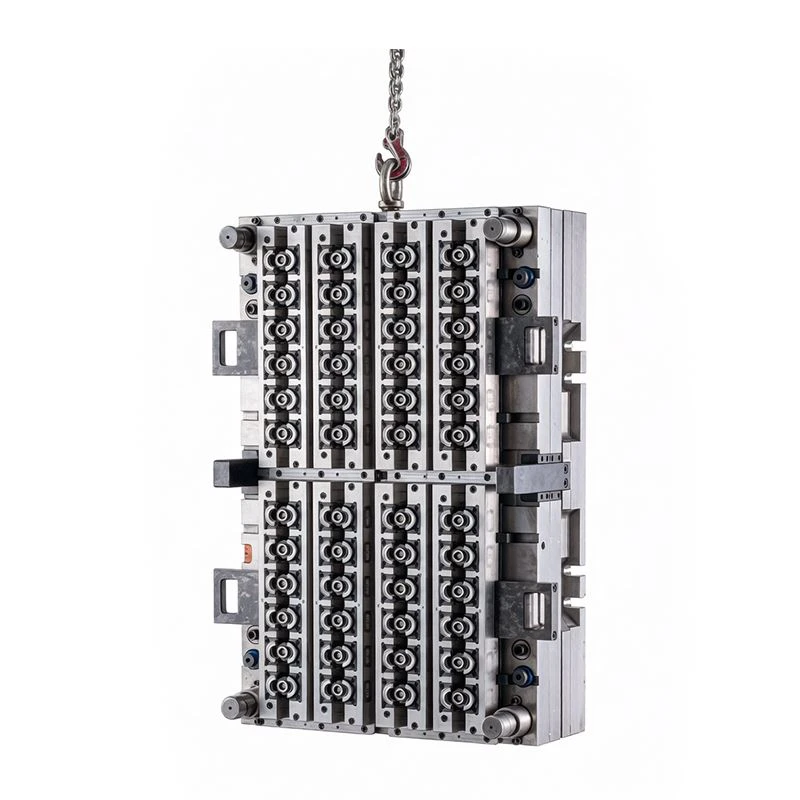
Now, let's talk about stainless steels. Stainless steels are known for their corrosion resistance. This is especially important when the plastic cap is going to be used in a wet or corrosive environment. 420 stainless steel is a common choice in the mold - making world. It has good hardness and toughness, along with excellent corrosion resistance. If you're making a Water Bottle Cap Mold, 420 stainless steel can prevent rust and other forms of corrosion that could affect the quality of the caps.
Aluminum is also a material we use, especially for prototyping. Aluminum is lightweight and easy to machine. It has a high thermal conductivity, which means it can cool down the plastic quickly during the molding process. This can speed up the production of prototype caps, allowing us to test the design and functionality in a short time. However, it's not as strong as tool steels or stainless steels, so it's not suitable for high - volume production. But for getting an initial idea of how the cap will look and work, it's a great option.
Beryllium copper is another interesting material. It has excellent thermal conductivity, even better than aluminum in some cases. This makes it ideal for areas of the mold where fast cooling is required, like the core pins. However, it's important to note that beryllium copper can be toxic if not handled properly, so we have to follow strict safety procedures when working with it.
For some specialized plastic cap molds, like those for Engine Oil Cap Mould, we might use high - performance alloys. These alloys are designed to have specific properties, such as high wear resistance or the ability to withstand harsh chemicals. They can be more expensive than the other materials, but they offer superior performance in demanding applications.
When it comes to Flip Top Cap Mold, the choice of material depends on the complexity of the design and the production volume. If the flip - top mechanism is very intricate, we need a material that can be machined with high precision. Tool steels are often the best bet in these cases, as they can hold tight tolerances.
The choice of material for a plastic cap mold also depends on the budget. Tool steels can be relatively expensive, especially high - performance ones. So, if a customer has a tight budget and only needs a small number of caps, we might suggest using aluminum for prototyping and then moving to a more cost - effective tool steel like P20 for low - volume production.
We also consider the surface finish requirements. Some plastic caps need a smooth, shiny surface. In these cases, we choose a material that can be polished to a high finish. Stainless steels and some high - quality tool steels are great for achieving a smooth surface on the molded caps.
As a Plastic Cap Mold supplier, we're always here to help our customers make the right choice of material for their specific needs. We have a team of experts who can analyze the design of the cap, the production volume, and the budget to recommend the best material. If you're in the market for a plastic cap mold, whether it's a simple design or a complex one, don't hesitate to reach out. We can work with you from the initial design stage, help you choose the right material, and then manufacture a high - quality mold that will meet all your requirements.
In conclusion, the materials used to make plastic cap molds are diverse, each with its own advantages and disadvantages. By carefully considering factors such as production volume, design complexity, budget, and surface finish requirements, we can select the most suitable material to create the perfect mold for your plastic caps. So, if you're interested in purchasing a plastic cap mold, just get in touch with us. We'll be more than happy to start a conversation and figure out the best solution for you.
References
- ASM Handbook Committee. (2000). ASM Handbook Volume 6: Welding, Brazing, and Soldering. ASM International.
- Dieter, G. E. (1986). Mechanical Metallurgy. McGraw - Hill.
- Kalpakjian, S., & Schmid, S. R. (2009). Manufacturing Engineering and Technology. Pearson Prentice Hall.