


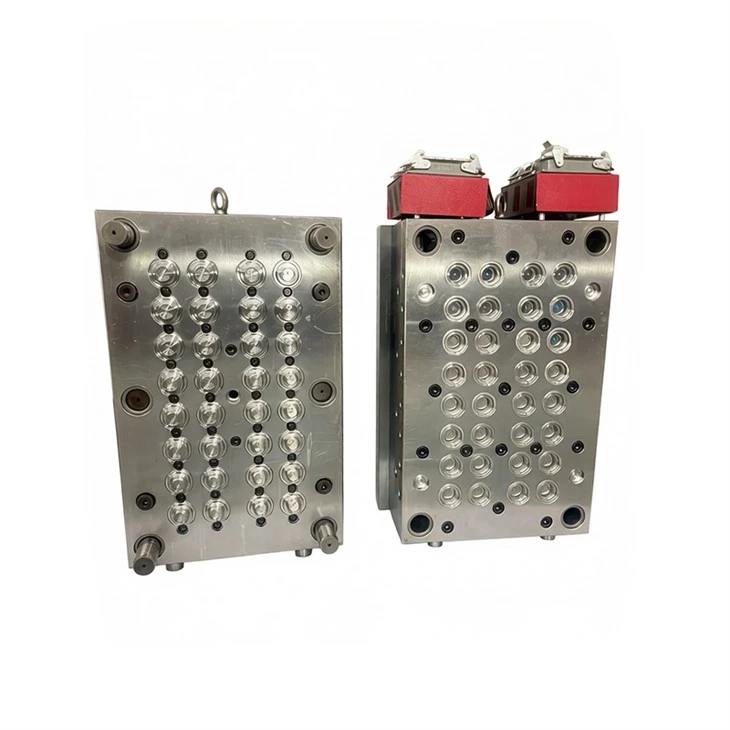
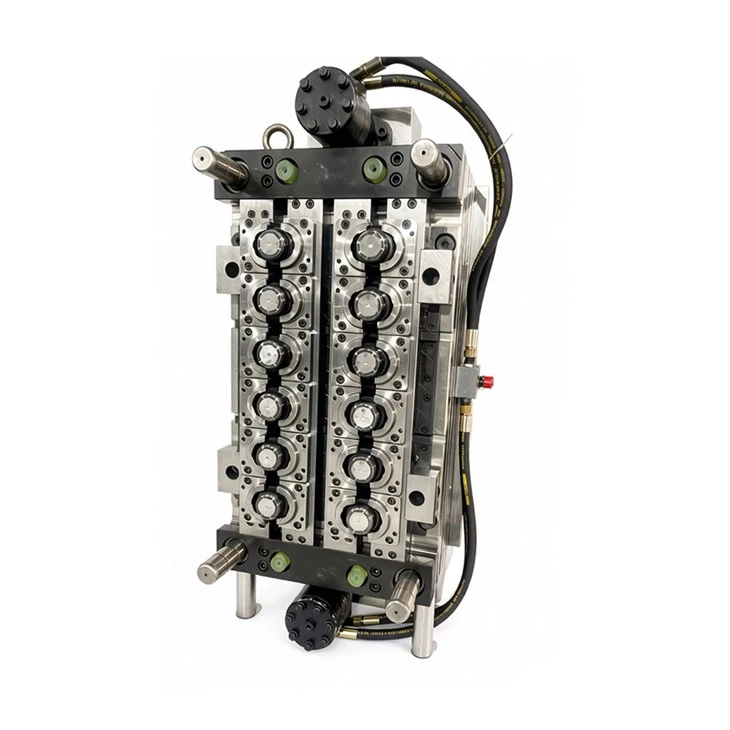
As a reputable supplier of Edible Oil PET Preform Moulds, I've witnessed firsthand the challenges and intricacies that come with these specialized tools. In the manufacturing process of edible oil packaging, the PET preform mould plays a crucial role. However, like any other industrial equipment, it is prone to several common failure modes that can significantly impact production efficiency and product quality.
1. Wear and Tear
One of the most prevalent failure modes of an edible oil PET preform mould is wear and tear. The mould is constantly subjected to high - pressure injection of molten PET material during the manufacturing process. This repeated stress causes the surface of the mould cavity to gradually erode. Over time, small scratches and grooves form on the mould surface, which can lead to two main issues.
Firstly, these surface irregularities can affect the surface finish of the preforms. Instead of producing smooth and flawless preforms, the final products may have a rough texture or visible marks. This not only degrades the aesthetic appeal of the edible oil containers but can also potentially affect the strength and integrity of the bottles. Secondly, as the wear progresses, it can cause dimensional changes in the mould cavity. A slight change in the size or shape of the preform can lead to problems during the subsequent blow - molding process, resulting in bottles that do not fit properly on the filling lines or have inconsistent wall thickness.
To address this issue, regular maintenance and inspection are essential. Manufacturers should implement a preventive maintenance schedule that includes surface treatment and polishing of the mould cavity at appropriate intervals. For high - volume production environments, using high - quality, wear - resistant materials for the mould construction can also significantly extend its service life.
2. Corrosion
Another common failure mode is corrosion, especially in the context of edible oil production. Edible oils may contain various acids, salts, and other chemical components that can react with the metal of the mould over time. Even a small amount of residue left on the mould surface after the manufacturing process can initiate a corrosion process if not properly cleaned.
Corrosion can lead to pitting on the mould surface, which is even more detrimental than general wear and tear. Pits can entrap plastic material during the injection process, leading to defects in the preforms such as holes or uneven surfaces. In severe cases, corrosion can weaken the mould structure, making it more prone to cracking or breaking under pressure.
To mitigate the risk of corrosion, the mould should be made from corrosion - resistant materials such as stainless steel. Additionally, a thorough cleaning procedure should be in place after each production run. This includes using appropriate cleaning agents that can effectively remove oil residues without damaging the mould surface.
3. Cracking
Cracking in an edible oil PET preform mould can occur due to multiple reasons. Thermal stress is a major contributor. During the injection molding process, the mould is rapidly heated as the molten PET is injected and then cooled to solidify the preform. This continuous cycle of heating and cooling creates thermal expansion and contraction in the mould material. If the material lacks sufficient thermal shock resistance, cracks can develop over time.
In addition, mechanical stress from improper handling or excessive clamping force during the moulding process can also cause cracking. A single instance of over - clamping can introduce micro - cracks in the mould structure, which can propagate and eventually lead to a complete failure of the mould.
Preventing cracking requires careful control of the injection molding parameters, including temperature and clamping force. Operators should be trained to handle the mould properly and follow the recommended operating procedures. For moulds prone to thermal stress, the use of materials with high thermal conductivity and low thermal expansion coefficients can be beneficial.
4. Ejection Issues
Proper ejection of the preforms from the mould is critical for a smooth production process. However, ejection problems are a common failure mode in edible oil PET preform moulds. These issues can be caused by several factors.
One factor is improper mould design. If the ejection mechanism is not well - designed, the preforms may get stuck in the mould cavity. This can lead to damage to the preforms during the ejection process, resulting in rejects. Another cause is the build - up of plastic residues on the ejection pins or the surface of the mould cavity. Over time, this build - up can increase the friction between the preform and the mould, making it difficult for the preforms to be ejected smoothly.
To avoid ejection issues, a well - thought - out mould design is essential. The ejection mechanism should be carefully engineered to ensure uniform and reliable ejection of the preforms. Regular cleaning of the ejection pins and the mould cavity can also prevent the build - up of plastic residues.
5. Gate Blockage
The gate is the opening through which the molten PET material enters the mould cavity. Gate blockage is a significant failure mode that can disrupt the production process. It can be caused by several factors, such as the presence of foreign particles in the plastic material, improper melting of the PET, or solidification of the plastic in the gate area due to poor temperature control.
When the gate is blocked, the flow of molten PET into the mould cavity is restricted or completely stopped. This results in incomplete or defective preforms. In some cases, the blockage can cause excessive pressure build - up in the injection system, which can damage the mould or other components of the injection molding machine.
To prevent gate blockage, a proper filtration system should be in place to remove any foreign particles from the plastic material before it enters the injection unit. Additionally, accurate temperature control in the injection system is crucial to ensure that the PET remains in a molten state until it fills the mould cavity.
Conclusion
Understanding the common failure modes of an edible oil PET preform mould is essential for manufacturers in the edible oil packaging industry. By being aware of these issues, appropriate preventive measures can be taken to minimize the risk of mould failure and ensure a smooth and efficient production process.
As a supplier of Edible Oil PET Preform Mould, we are committed to providing high - quality moulds that are designed to withstand these common failure modes. Our team of experts is also available to offer technical support and advice on mould maintenance and operation.
If you are in the market for high - performance edible oil PET preform moulds, or if you have any questions regarding our products, we encourage you to contact us for a detailed discussion. We are eager to work with you and help you achieve the best results in your edible oil packaging production.
In addition to our Edible Oil PET Preform Moulds, we also offer other types of plastic bottle molds, such as Mineral Water Bottle Cap Mould, Engine Oil Bottle Mould, and Carbonated Beverage Preform Mold. Contact us today to explore how we can meet your specific moulding needs.
References
- Beever, R. (2018). Plastics Injection Moulding Technology. Oxford: Elsevier.
- Rosato, D. V., & Rosato, D. V. (2017). Injection Molding Handbook (3rd ed.). New York: Wiley.
- Throne, J. L. (2019). Plastics Process Engineering. Boca Raton: CRC Press.