


Hey there! As a supplier of Engine Oil Bottle Moulds, I've been getting a lot of questions lately about the abrasion resistance of these moulds. So, I thought I'd take a moment to break it down for you.
First off, let's talk about why abrasion resistance is such a big deal. When you're using an engine oil bottle mould, it goes through a lot. There's the constant contact with the plastic resin during the injection - moulding process. The resin flows into the mould under high pressure, and over time, this flow can cause wear and tear on the internal surfaces of the mould. If the mould doesn't have good abrasion resistance, the surface can start to get rough. This roughness can transfer onto the engine oil bottles, affecting their appearance and potentially even their functionality.
Think about it. A rough - surfaced bottle can be more difficult to label, and it might not stack as neatly on the shelves. Plus, if the wear on the mould is severe enough, it could lead to defects in the bottles, like uneven walls or inconsistent shapes. That's not good news for your production line or your bottom line.
So, what exactly determines the abrasion resistance of an engine oil bottle mould?
Material Selection
The type of material used to make the mould is the first and most crucial factor. We usually use high - grade steel in our Engine Oil Bottle Mould. High - carbon and alloy steels are popular choices because they offer excellent hardness and toughness. For example, some of the steels we use have a high chromium content. Chromium helps to form a hard carbide layer, which provides an extra level of protection against abrasion.
But it's not just about the base material. The heat treatment process also plays a huge role. Through proper heat treatment, we can adjust the hardness and microstructure of the steel. This allows us to optimize the abrasion resistance while still maintaining the necessary toughness. If the steel is too hard, it might become brittle and prone to cracking. On the other hand, if it's too soft, it won't be able to withstand the abrasion from the plastic resin.
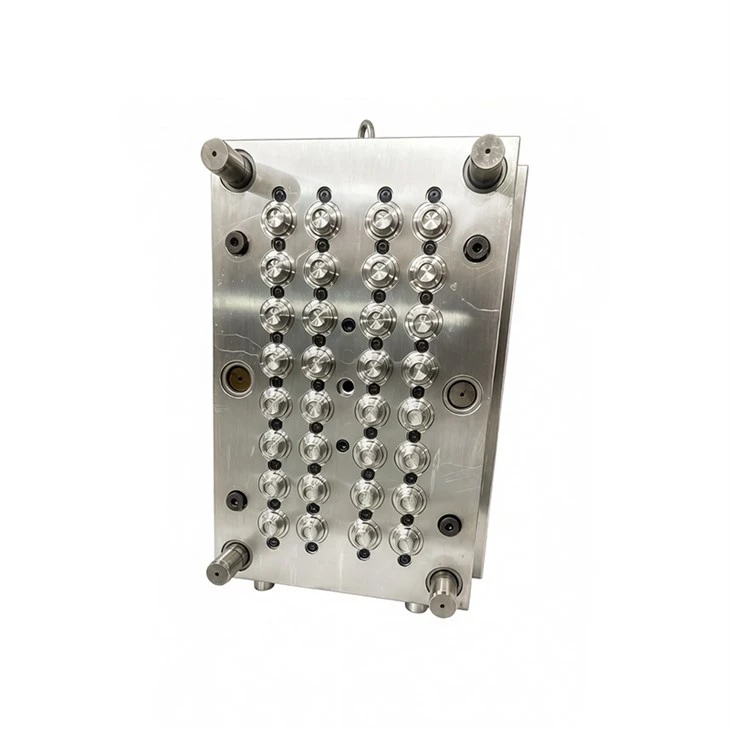
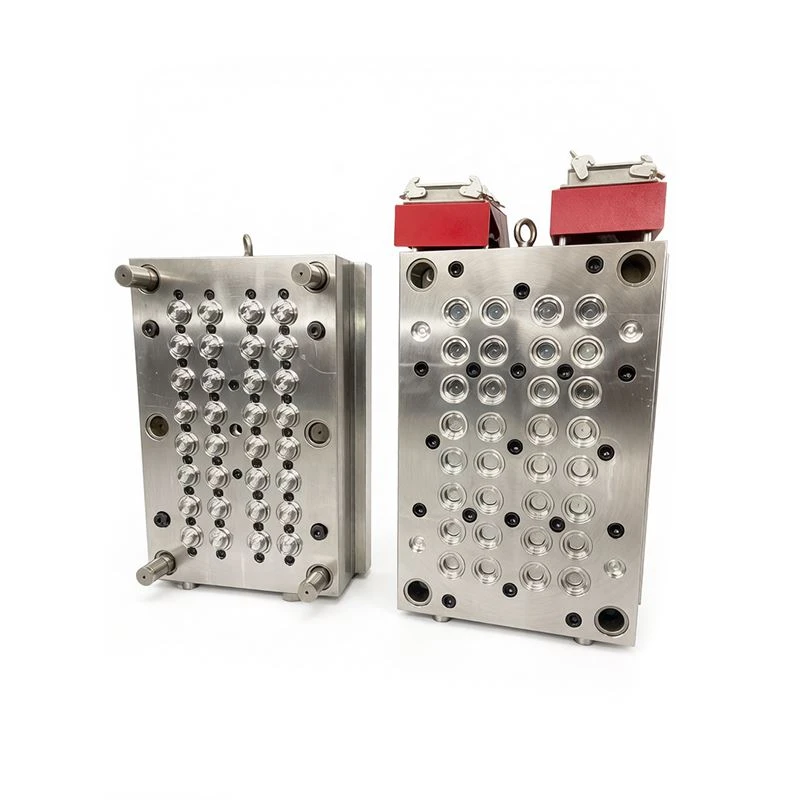
Surface Treatment
In addition to the base material, surface treatments can significantly enhance the abrasion resistance of the mould. One common surface treatment is nitriding. Nitriding involves introducing nitrogen into the surface of the steel, creating a hard nitride layer. This layer acts as a barrier between the steel and the high - pressure plastic resin, reducing the direct contact and thus the abrasion.
Another popular option is the application of a hard chrome plating. Chrome plating gives the mould a smooth and very hard surface. It not only reduces abrasion but also makes it easier for the plastic to flow out of the mould during the ejection phase. This means less friction and less wear on the mould.
Design Considerations
The design of the mould can also impact its abrasion resistance. For example, the flow channels in the mould need to be carefully designed. If the channels are too narrow or have sharp corners, the plastic resin will experience more turbulence as it flows through. This turbulence can increase the friction on the mould surface, leading to more rapid abrasion.
We design our engine oil bottle moulds with smooth, well - rounded flow channels. This allows the plastic to flow freely and evenly, reducing the stress on the mould walls. Additionally, we pay close attention to the parting lines and ejector pin locations. These areas can be prone to abrasion because they often come into direct contact with the moving parts of the moulding machine. By optimizing these details, we can extend the lifespan of the mould.
Comparison with Other Types of Moulds
It's interesting to compare the abrasion resistance requirements of engine oil bottle moulds with other types of plastic bottle moulds. Take, for instance, Carbonated Beverage Preform Mold. These moulds need to withstand the pressure and flow of the plastic used for carbonated beverage bottles. However, the plastic for carbonated beverages is often less abrasive compared to the plastic used for engine oil bottles. Engine oil bottles usually require a more robust and abrasion - resistant mould because the plastic might be more viscous and contain additives that can be harsh on the mould surface.
Similarly, Mineral Water Bottle Cap Mould have different abrasion - related challenges. The smaller size and the specific design requirements for bottle caps mean that the stress distribution on the mould is different. While abrasion is still a concern, the focus might be more on precision and less on the sheer force of the plastic flow compared to engine oil bottle moulds.
The Edible Oil PET Preform Mould has its own set of considerations. The plastic used for edible oil bottles is often PET, which has different properties compared to the plastic for engine oil bottles. PET is generally less abrasive, but the mould still needs to maintain its shape and smoothness to ensure the quality of the preforms.
Measuring Abrasion Resistance
So, how do we know if an engine oil bottle mould has good abrasion resistance? There are several methods. One way is to conduct a wear test. We can run a series of moulding cycles using a specific type of plastic resin and then measure the amount of material loss on the mould surface. This gives us a quantitative measure of how well the mould can resist abrasion.
Another method is to visually inspect the mould after a certain number of cycles. Look for signs of roughness, scratches, or pitting on the internal surface. If these signs are minimal, it's a good indication that the mould has good abrasion resistance.
Our Commitment as a Supplier
As a supplier of Engine Oil Bottle Moulds, we're committed to providing you with the highest - quality moulds that have excellent abrasion resistance. We use the latest technology and materials in our manufacturing process. Our team of experts carefully selects the right steels and applies the most effective surface treatments to ensure that our moulds can stand up to the rigors of continuous production.
We also offer customization options. Every customer might have different requirements, whether it's the size, shape, or the specific type of plastic resin used. We work closely with you to design and build a mould that meets your exact needs while maintaining optimal abrasion resistance.
If you're in the market for engine oil bottle moulds, or if you have any questions about abrasion resistance or our other products like Carbonated Beverage Preform Mold, Mineral Water Bottle Cap Mould, and Edible Oil PET Preform Mould, don't hesitate to reach out. We're here to help you make the right choice for your production line. Contact us to start a conversation about your needs and how we can provide you with the best solutions.
References
- "Plastic Injection Moulding Handbook" - A comprehensive guide on the theory and practice of plastic injection moulding, which includes detailed information on mould materials and wear resistance.
- "Steel for Mould and Die Applications" - This research paper delves into the properties and selection criteria of different types of steel used in mould manufacturing, with a focus on abrasion resistance.