


As a medical injection mold supplier, I've witnessed firsthand the critical role that fatigue resistance plays in the manufacturing of high - quality medical injection molds. In the medical field, where precision and reliability are non - negotiable, the fatigue resistance of injection molds can significantly impact the overall performance, safety, and cost - effectiveness of medical devices.
Understanding Fatigue in Medical Injection Molds
Fatigue in injection molds occurs when the mold is subjected to repeated cyclic loading during the injection molding process. Each cycle includes the injection of molten plastic, holding pressure, cooling, and ejection of the molded part. These repeated mechanical stresses can lead to the formation and growth of cracks in the mold material over time.
In medical applications, the consequences of mold fatigue can be far - reaching. Cracks in the mold can lead to defects in the molded medical devices, such as flash, short shots, or inconsistent wall thickness. These defects can compromise the functionality of the medical product, and in some cases, pose a risk to patient safety. For example, a syringe with inconsistent wall thickness may not deliver the correct dosage of medication, while a pipette tip with flash may contaminate samples.
Fatigue Resistance Requirements for Medical Injection Molds
Material Selection
The choice of material for medical injection molds is crucial for achieving high fatigue resistance. High - quality tool steels are commonly used due to their excellent mechanical properties. Materials like P20, H13, and S7 offer good toughness, hardness, and resistance to wear and corrosion. For instance, H13 steel has high hardenability and can withstand high - temperature environments during the injection molding process. It also has good resistance to thermal fatigue, which is especially important in molds that are repeatedly heated and cooled.
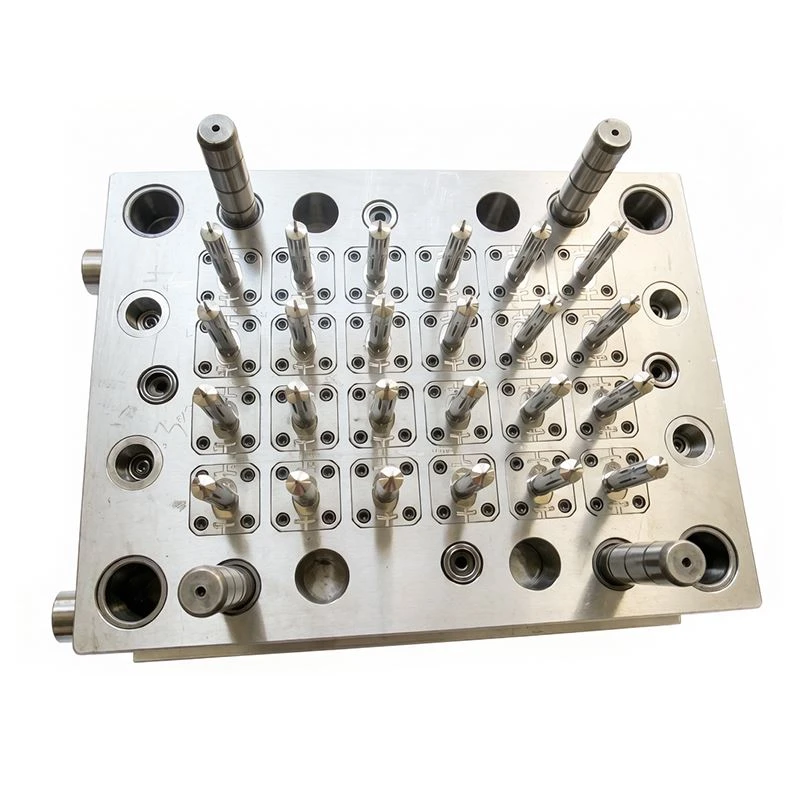
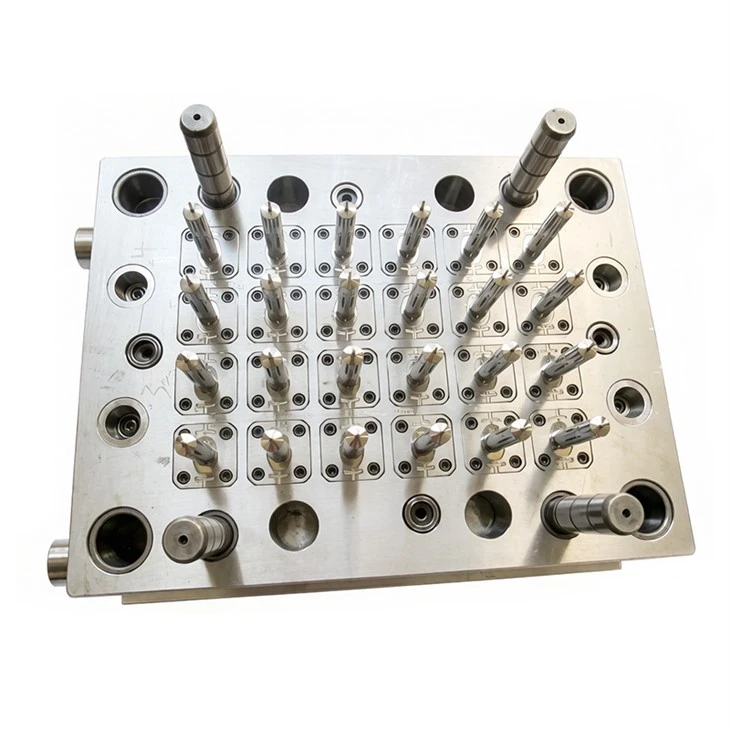
When we manufacture Pipette Tip Mould, we carefully select the right material according to the expected number of molding cycles and the specific requirements of the pipette tip design. A high - precision pipette tip requires a mold material with excellent fatigue resistance to maintain its dimensional accuracy over a large number of cycles.
Heat Treatment
Proper heat treatment is essential for enhancing the fatigue resistance of medical injection molds. Heat treatment processes such as quenching and tempering can improve the hardness, toughness, and microstructure of the mold steel. Quenching rapidly cools the steel from a high temperature to form a martensitic structure, which provides high hardness. Tempering is then carried out to relieve the internal stresses generated during quenching and to improve the toughness of the steel.
By optimizing the heat treatment parameters, we can ensure that the mold has a balanced combination of hardness and toughness. This is particularly important for molds used to produce medical products like Cryovial Tube and Box Mould, where the mold needs to withstand repeated molding cycles without cracking or deforming.
Surface Finish and Coating
The surface finish of the mold also affects its fatigue resistance. A smooth surface finish reduces stress concentrations and friction during the molding process, which can help prevent crack initiation. We use advanced machining and polishing techniques to achieve a high - quality surface finish on our medical injection molds.
In addition to a smooth surface finish, applying coatings can further enhance the fatigue resistance of the mold. Coatings such as titanium nitride (TiN), titanium carbonitride (TiCN), and diamond - like carbon (DLC) can improve the wear resistance, corrosion resistance, and release properties of the mold. For example, a TiN - coated mold used for Syringe Mould can reduce the friction between the mold and the plastic syringe, resulting in fewer defects and a longer mold life.
Design Considerations
The design of the medical injection mold can have a significant impact on its fatigue resistance. The mold should be designed to distribute the stresses evenly during the molding process. This can be achieved through proper gating and runner design, as well as the use of appropriate rib and wall thicknesses in the mold cavity.
For example, in the design of a Coagulation Cup Mould, we carefully consider the flow path of the molten plastic to ensure that it fills the cavity evenly. Uneven filling can lead to uneven stress distribution in the mold, which can increase the risk of fatigue failure. Additionally, we avoid sharp corners and edges in the mold design, as these can act as stress concentrators and initiate crack formation.
Testing and Quality Control
To ensure that our medical injection molds meet the required fatigue resistance standards, we conduct comprehensive testing and quality control measures. We use non - destructive testing methods such as ultrasonic testing and magnetic particle inspection to detect any cracks or defects in the mold before it is put into production.
We also perform fatigue testing on prototype molds to simulate the actual molding conditions and determine the expected number of cycles the mold can withstand. Based on the test results, we can make adjustments to the mold design, material selection, or heat treatment process if necessary.
For instance, when we develop a Urine Container Mould, we subject the prototype mold to a series of fatigue tests. These tests help us verify that the mold can produce a large number of high - quality urine containers without experiencing fatigue failure.
Importance of Fatigue Resistance in the Medical Industry
In the medical industry, the reliability of medical devices is of utmost importance. Medical injection molds with high fatigue resistance can produce consistent and high - quality medical products over a large number of molding cycles. This not only reduces the production cost in the long run but also ensures the safety and effectiveness of the medical devices.
A mold with poor fatigue resistance may need to be replaced frequently, which can lead to production downtime and increased costs. Moreover, defective medical products produced by fatigued molds can result in product recalls, legal liabilities, and damage to the reputation of the medical device manufacturer.
Contact for Procurement
If you are in the market for high - quality medical injection molds with excellent fatigue resistance, we are here to help. As an experienced medical injection mold supplier, we have the expertise and resources to provide you with customized solutions that meet your specific requirements. We are committed to delivering molds that offer long - term reliability and performance. Please reach out to us for procurement discussions, and let's work together to create the best medical injection molds for your business.
References
- Dooner, T. M., & Culhane, M. F. (2007). Injection Molding Handbook. Elsevier.
- Rosato, D. V., & Rosato, D. V. (2000). Design for Injection Molding. Kluwer Academic Publishers.
- Throne, J. L. (1996). Plastics Injection Molding: Materials, Processing, and Technology. Marcel Dekker.