


What are the different types of Mineral Water Bottle Cap Moulds?
As a dedicated supplier of Mineral Water Bottle Cap Mould, I've had the privilege of witnessing the diverse range of moulds that play a crucial role in the production of mineral water bottle caps. In this blog post, I'll delve into the different types of these moulds, exploring their features, applications, and the factors that make them unique.
1. Single - Cavity Moulds
Single - cavity moulds are the simplest form of mineral water bottle cap moulds. As the name suggests, they have only one cavity, which means they can produce one bottle cap per injection cycle. These moulds are often used for small - scale production or for prototyping purposes.
One of the main advantages of single - cavity moulds is their low cost. They are relatively inexpensive to manufacture, making them an ideal choice for businesses that are just starting out or for those who need to produce a limited quantity of bottle caps. Additionally, single - cavity moulds are easy to maintain and operate. They require less complex machinery and can be used with smaller injection molding machines.
However, single - cavity moulds also have some limitations. The production rate is relatively slow compared to multi - cavity moulds. If you need to produce a large number of bottle caps in a short period of time, single - cavity moulds may not be the most efficient option.
2. Multi - Cavity Moulds
Multi - cavity moulds are designed to produce multiple bottle caps in a single injection cycle. These moulds can have anywhere from 2 to over 100 cavities, depending on the specific requirements of the production process.
The primary advantage of multi - cavity moulds is their high production efficiency. They can significantly increase the output of bottle caps, making them suitable for large - scale production. For example, a 64 - cavity mould can produce 64 bottle caps in one cycle, which is much faster than a single - cavity mould.
Another benefit of multi - cavity moulds is their cost - effectiveness in the long run. Although the initial investment in a multi - cavity mould is higher than that of a single - cavity mould, the cost per bottle cap is lower when producing a large quantity. This is because the cost of the mould is spread over a larger number of products.
However, multi - cavity moulds also present some challenges. They require more advanced machinery and a higher level of technical expertise to operate. Additionally, the design and manufacturing of multi - cavity moulds are more complex, which means they may be more expensive to repair and maintain.
3. Hot Runner Moulds
Hot runner moulds are a type of mould that uses a heated system to keep the plastic molten as it flows through the mould. This allows for more precise control of the plastic flow and reduces the amount of material waste.
One of the key advantages of hot runner moulds is the high - quality finish of the bottle caps. The heated system ensures that the plastic is evenly distributed throughout the mould, resulting in caps with consistent dimensions and a smooth surface. This is particularly important for mineral water bottle caps, as they need to have a good seal to prevent leakage.
Hot runner moulds also offer improved production efficiency. Since the plastic is kept molten, there is no need to wait for the runner system to cool down between cycles. This reduces the cycle time and increases the overall production rate.
However, hot runner moulds are more expensive to purchase and maintain compared to cold runner moulds. The heated system requires additional energy and may be more prone to breakdowns.
4. Cold Runner Moulds
Cold runner moulds are the traditional type of moulds used in injection molding. In a cold runner mould, the plastic cools down in the runner system after each injection cycle, and the solidified runner is removed from the mould.
Cold runner moulds are relatively simple and inexpensive to manufacture. They are a popular choice for businesses that are looking for a cost - effective solution for producing bottle caps. Additionally, cold runner moulds are more forgiving in terms of material selection and processing conditions.
However, cold runner moulds have some drawbacks. The solidified runner needs to be removed and recycled, which can result in material waste. Also, the cycle time is longer compared to hot runner moulds because of the need to cool down the runner system.
5. Threaded Moulds
Threaded moulds are specifically designed to produce bottle caps with threads. These threads are essential for creating a secure seal between the bottle and the cap.
There are different types of threaded moulds, including single - start and multi - start threads. Single - start threads are the most common type and are suitable for most applications. Multi - start threads, on the other hand, can provide a faster and more secure locking mechanism.
The design of threaded moulds is critical to ensure the proper fit and function of the bottle caps. The pitch, depth, and shape of the threads need to be carefully controlled to meet the specific requirements of the bottles.
6. Tamper - Evident Moulds
Tamper - evident moulds are used to produce bottle caps that provide a visible indication if the bottle has been opened or tampered with. These caps are commonly used for mineral water bottles to ensure the safety and integrity of the product.
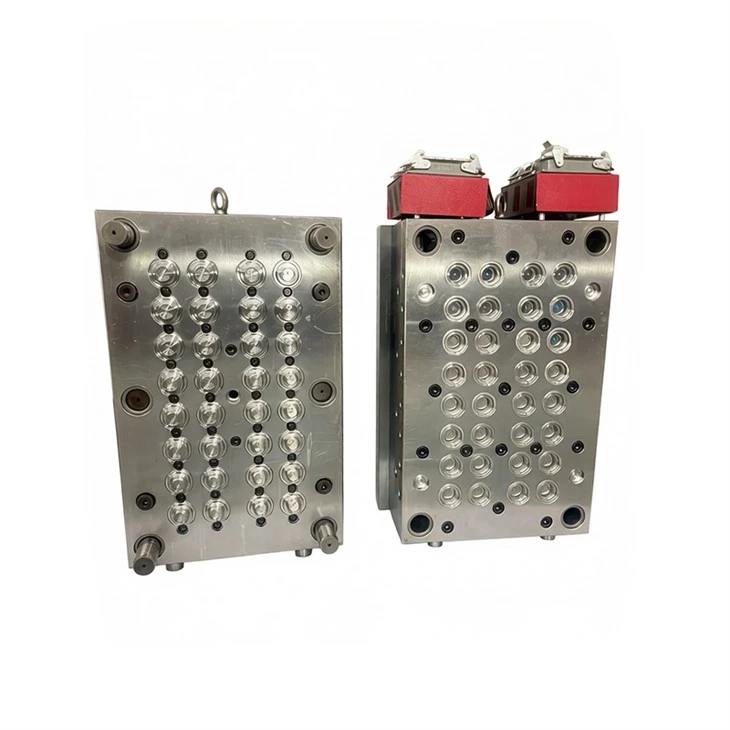
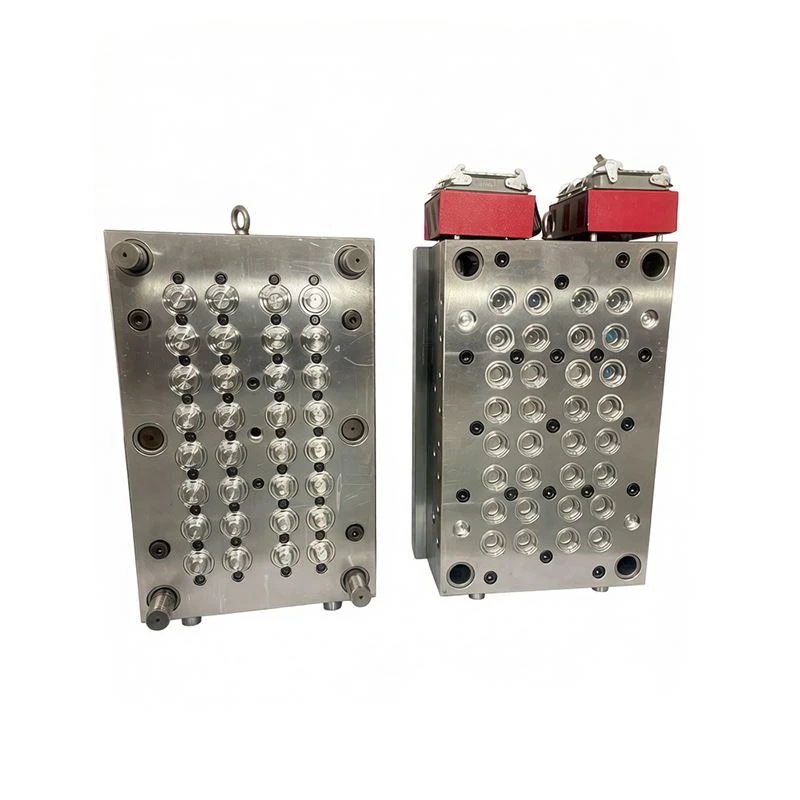
There are several types of tamper - evident features that can be incorporated into the mould design. One common type is the break - away ring, which is attached to the cap and breaks off when the cap is first opened. Another type is the shrink - band, which is placed around the neck of the bottle and shrinks to form a tight seal.
Tamper - evident moulds require precise design and manufacturing to ensure that the tamper - evident features work effectively. The mould needs to be able to produce caps with consistent quality and reliable tamper - evident mechanisms.
Factors to Consider When Choosing a Mineral Water Bottle Cap Mould
When choosing a mineral water bottle cap mould, there are several factors that need to be considered.
- Production Volume: If you need to produce a large number of bottle caps, a multi - cavity mould may be the best option. For small - scale production, a single - cavity mould may be sufficient.
- Quality Requirements: If high - quality finish and precise dimensions are important, a hot runner mould or a mould with advanced features may be required.
- Cost: The initial cost of the mould, as well as the cost of operation and maintenance, should be taken into account. Consider the long - term cost per bottle cap when making a decision.
- Material Compatibility: Different moulds may be more suitable for different types of plastics. Make sure the mould is compatible with the material you plan to use for the bottle caps.
As a supplier of Mineral Water Bottle Cap Mould, we understand the importance of these factors and can help you choose the right mould for your specific needs. We also offer a range of other moulds, such as Engine Oil Bottle Mould, Edible Oil PET Preform Mould, and Carbonated Beverage Preform Mold.
If you're interested in learning more about our products or would like to discuss your specific requirements, please don't hesitate to contact us. We're here to assist you in finding the best solutions for your production needs.
References
- Injection Molding Handbook, by Rosato, Rosato, and Schut
- Plastic Mould Design, by R. A. Chapman