


Hey there! As a supplier of Flip Top Cap Molds, I'm super excited to dig into the world of the demolding process for these molds. Demolding might sound like a simple step, but it's actually a crucial part of manufacturing high - quality flip top caps. In this blog, I'll walk you through everything you need to know about it.
Understanding the Basics of Flip Top Cap Mold
First off, let's have a quick refresher on what a flip top cap mold is. These molds are designed to create the flip top caps that you see on all kinds of containers, from shampoo bottles to condiment jars. They're made with high - precision machinery to ensure that each cap comes out with the right shape, size, and quality.
We've got different types of molds in our product range, like Closure Mold, Engine Oil Cap Mould, 5 Gallon Cap Mould, Water Bottle Cap Mould, and Water Bottle Cap Mold. Each of these is tailored to meet specific industry needs.
The Demolding Process Step - by - Step
1. Cooling Phase
Before we even think about demolding, the plastic in the mold needs to cool down. This is a super important step because if the plastic is still too hot, it can deform when we try to remove it. The cooling time depends on a few factors, such as the type of plastic used, the size and thickness of the cap, and the design of the mold.
We usually use a cooling system in our molds to speed up this process. It could be water - cooled channels running through the mold, which help transfer heat away from the plastic. Once the plastic has reached the right temperature, it's ready for the next step.
2. Ejection Preparation
Once the plastic is cooled, we need to get the mold ready for ejection. This involves checking that all the moving parts of the mold are in good working order. We also make sure that there's no debris or leftover plastic from previous runs that could interfere with the demolding process.
In some cases, we might apply a release agent to the mold surface. This helps reduce the friction between the plastic cap and the mold, making it easier to remove the cap without any damage. However, we have to be careful with the amount of release agent we use, as too much can cause issues with the appearance and quality of the cap.
3. Ejection Mechanism
Now comes the actual demolding part. We use an ejection mechanism to push the formed flip top cap out of the mold. There are different types of ejection mechanisms, and the one we choose depends on the mold design and the requirements of our customers.
One common type is the ejector pin system. Ejector pins are small rods that are placed inside the mold. When it's time to demold, these pins are pushed forward, which forces the cap out of the mold cavity. The pins are carefully positioned so that they don't leave any visible marks on the cap.
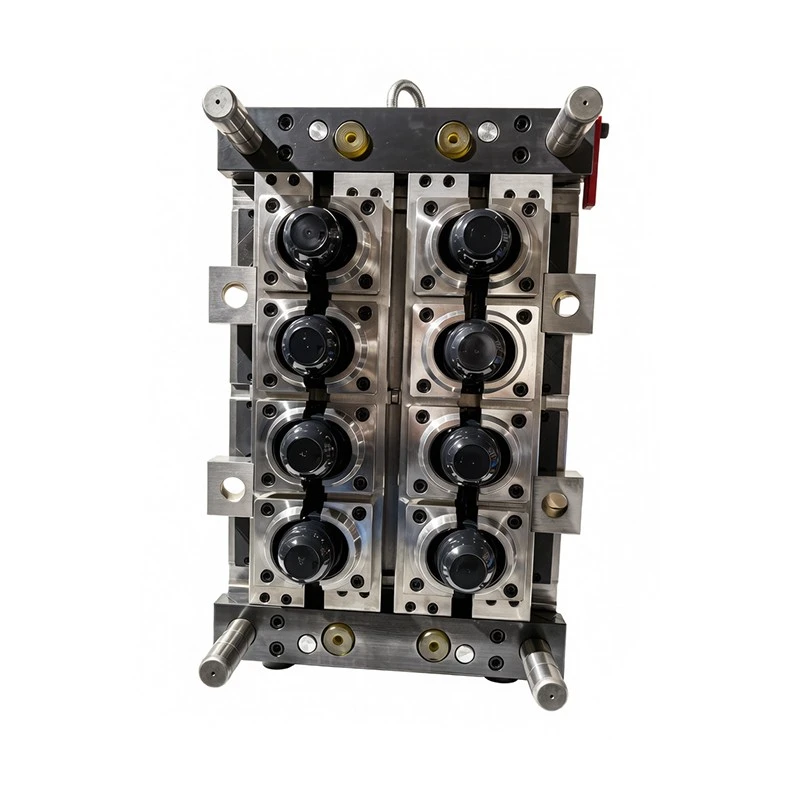

Another option is the stripper plate mechanism. A stripper plate is a flat plate that moves along with the mold. As the mold opens, the stripper plate pushes the cap off the core of the mold. This method is great for caps with complex shapes or undercuts, as it can provide a more even and gentle ejection.
4. Inspection
Once the cap is ejected, it goes through a thorough inspection. We look for any defects, such as cracks, warping, or incomplete filling. If we find any issues, we need to figure out what went wrong in the process. It could be a problem with the cooling, the ejection mechanism, or the quality of the plastic.
We use both visual inspection and sometimes more advanced testing methods, like measuring the dimensions of the cap with precision tools. This ensures that only high - quality caps are sent to our customers.
Challenges in the Demolding Process
1. Sticking
One of the biggest challenges we face is the cap sticking to the mold. This can happen if the cooling is uneven, the release agent is not applied correctly, or there are rough spots on the mold surface. When the cap sticks, it can cause damage to the cap or the mold itself.
To solve this problem, we constantly monitor the cooling process and make sure that the mold surface is smooth and clean. We also adjust the amount and type of release agent based on the plastic material and the mold design.
2. Undercuts
Flip top caps often have undercuts, which are parts of the cap that prevent it from being easily ejected from the mold. These undercuts can be a real headache during demolding. We have to use special mold designs and ejection mechanisms to deal with them.
For example, we might use slides or lifters in the mold. These are moving parts that can retract or move out of the way to allow the cap with undercuts to be ejected safely.
Quality Control in Demolding
Quality control is a top priority for us. We have a strict set of standards that every flip top cap has to meet. During the demolding process, we take several steps to ensure quality.
We keep detailed records of each production run, including the cooling times, ejection forces, and any issues that we encounter. This data helps us identify trends and make improvements to the process over time.
Our team of experienced technicians is always on hand to monitor the demolding process. They have the knowledge and skills to quickly spot any problems and take corrective action.
Why Choose Our Flip Top Cap Molds
We've been in the business of supplying flip top cap molds for a long time, and we've got a lot of expertise in the demolding process. Our molds are made with high - quality materials and advanced manufacturing techniques, which means they can produce caps with excellent precision and consistency.
We also offer customized solutions. Whether you need a specific size or design of flip top cap, we can work with you to create the perfect mold. And because we understand the demolding process so well, we can help you avoid common problems and ensure a smooth production process.
If you're in the market for flip top cap molds, or if you have any questions about the demolding process or our products, don't hesitate to reach out. We're here to help you make the best choice for your business. Let's start a conversation and see how we can work together to meet your needs!
References
- Injection Molding Handbook, by Dominik Bogdanski
- Molding of Plastics, by Hanser Gardner Publications