


Laboratory Consumables Molds
High-Precision Medical Injection Molds for Laboratory Consumables | Custom Tooling Manufacturer
High-precision custom injection molds engineered for pipette tips, centrifuge tubes, test tubes, microplates, Petri dishes, and specialized laboratory plasticware. Every project starts from product geometry, specified resin, critical dimensions, and production targets to ensure optimal cavity layout, cooling, and ejection performance.
-
![Urine Specimen Container Mold]() Urine Specimen Container MoldEngineered for high-volume automated production lines, this multi-cavity plastic injection mold delivers strict wall thickness uniformity, leak-free screw thread integrity, and reliable...read more
-
![Laboratory Petri Dish Mold]() Laboratory Petri Dish MoldEngineered for automated multi-cavity injection lines, this precision mold produces optical-grade polystyrene petri dishes with uniform wall thickness, zero central warpage, and absolute...read more
-
![Cryogenic Vial Box Mold]() Cryogenic Vial Box MoldPrecision injection mold engineered for high-volume production of stackable, ultra-low temperature resistant laboratory storage boxes, built with hardened stainless steel, optimized thermal...read more
-
![Coagulation Analyzer Cup Mold]() Coagulation Analyzer Cup MoldPrecision multi-cavity injection tooling engineered for high-volume manufacturing of optical-grade, thin-walled reaction vessels used in automated blood coagulation analyzers.read more
-
![Laboratory Pipette Tip Mold]() Laboratory Pipette Tip MoldEngineered for high-volume automated liquid handling manufacturing, this precision injection mold produces medical-grade disposable pipette tips with strict concentricity, flash-free sealing...read more
-
![Blood Collection Tube Mold]() Blood Collection Tube MoldEngineered for high-volume automated manufacturing, this specialized injection mold produces medical-grade blood collection tubes. It delivers exceptional dimensional accuracy, uniform wall...read more


Why Choose Our Laboratory Consumables Molds
Engineering Based on Product Requirements
Laboratory consumables vary significantly in wall thickness, tolerances, and functional interfaces. Mold design is customized accordingly rather than applying a universal template.
Production-Oriented Mold Design
Cavity counts, runner systems, and cooling layouts are balanced against target output and molding equipment to maximize part consistency and minimize cycle times.
Technical Review Before Manufacturing
Comprehensive DFM (Design for Manufacturability) reviews—covering product drawings, resin grades, and acceptance criteria—are completed before any tooling begins.
Mold Maintenance Considerations
Easy access to wear-prone components, cooling channels, and ejector systems is built into the architecture to ensure long-term, trouble-free operation.
Key Mold Specifications
|
Parameter |
Specification Details |
|
Cavity Configurations |
16, 32, 64, and 96-cavity scalable layouts |
|
Compatible Polymers |
Medical-grade PP, PE, PS, PC, and cyclic olefin polymers |
|
Tool Life Expectancy |
Engineered for over 3,000,000 molding cycles |
|
Hot Runner Systems |
Sequenced valve-gate and thermal-balanced manifolds |
|
Dimensional Tolerance |
Critical feature repeatability within ±0.005mm |
|
Steel Hardness Range |
Core/cavity blocks hardened to HRC 48 - 52 |
Mold Features
Precision Cavity and Core Design
High-precision CNC and EDM machining ensure tight tolerances for small openings, thin walls, internal threads, and sealing surfaces.
01
Filling and Gate Position
Optimized gate location and runner layouts minimize weld lines, reduce material stress, and support balanced filling across multi-cavity tools.
02
Cooling and Part Stability
Strategically placed cooling channels ensure uniform heat removal, preventing warpage and controlling shrinkage.
03
Venting and Ejection
Efficient venting prevents trapped air and burn marks, while tailored ejection components protect thin-walled and delicate parts from damage.
04
Cavity Surface Finish
Finishing methods are precisely selected—ranging from high-polish optical clarity for transparent ware to specific textures for gripping surfaces.
05
Specialized Laboratory Product Tooling
Pipette Tip Molds: Rigorous control over internal tapers, tip openings, and multi-cavity dimensional consistency for automated liquid handling compatibility.
Centrifuge & Test Tube Molds: Engineered around tube length, bottom geometry, wall thickness uniformity, and precise cap/sealing interfaces.
Microplate Molds: Coordinated control of well geometry, strict spacing, plate flatness, and multi-well cavity layout stability.
Petri Dish Molds: Designed for dish diameter, rim geometry, uniform base flatness, and precise lid-to-base fit verification.
Sample Container Molds: Precision-tooled threads, secure snap-fits, and critical neck dimensions for vials, bottles, and reagent containers.
General Laboratory Plasticware: Custom tooling solutions for reagent reservoirs, specimen racks, and specialized tube holders.
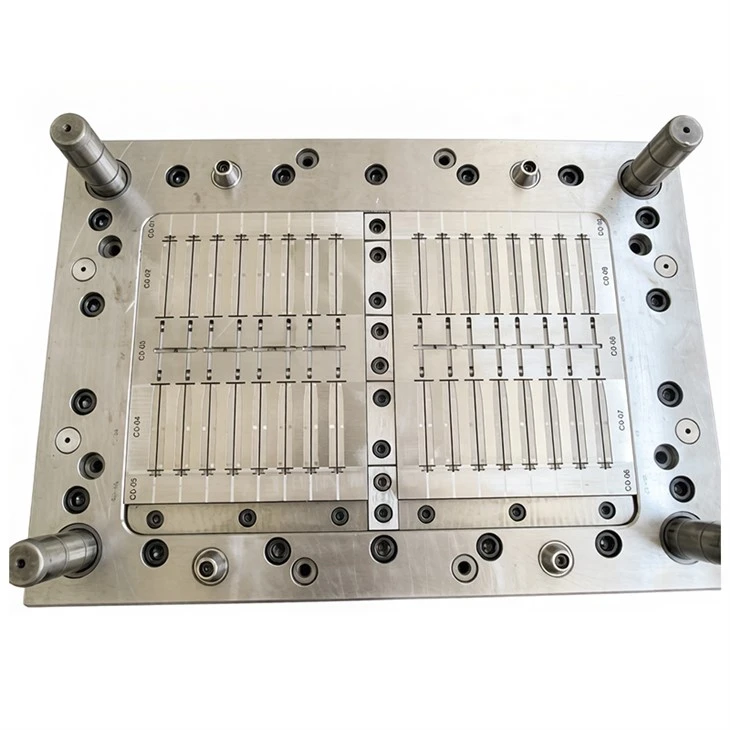
Single-Cavity Molds: Ideal for specialized components, early design validation, and low-volume pre-production testing.
Multi-Cavity Molds: Designed to maximize output per cycle while strictly maintaining filling balance and part-to-part uniformity.
Family Molds: Efficiently produces related components in a single cycle when geometry, resin, and processing windows align.
Layout and Output Planning: Balances production rate, mold dimensions, cooling requirements, and expected cycle life to maximize yield.
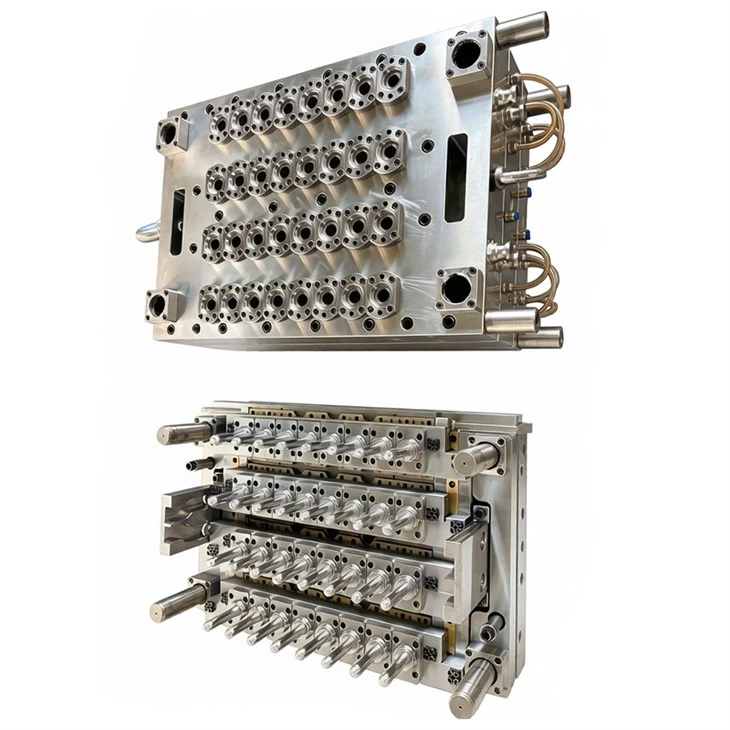
Mold Base and Support Plates:
Robust structural support selected to withstand high clamping loads and operating pressures.
Runner and Gating Configuration:
Customized cold or hot runner systems optimized for resin behavior, minimal waste, and clean gate marks.
Cooling Channels:
Strategically drilled circuits ensuring uniform heat removal without compromising structural steel strength.
Ejection and Guidance Systems:
Precision guide components and ejector pins, sleeves, or stripper plates ensuring smooth, damage-free part release.
Venting and Replaceable Inserts:
Designed for easy maintenance, localized wear-part replacement, and reliable trapped-air evacuation.
Thermoplastic Materials & Project Inputs
Common Laboratory Resins Handled
• Polypropylene (PP): Standard for autoclavable tubes, containers, and racks.
• Polystyrene (PS): Ideal for optical clarity in Petri dishes and microplates.
• Polyethylene (PE): Used for flexible bottles, squeezable containers, and caps.
• Polycarbonate (PC): Selected for high-strength, transparent, and heat-resistant laboratory ware.
• Other Thermoplastics: Custom evaluation for specialized engineering plastics.
Essential Product Information Needed for Design
• Resin type, commercial grade, color requirements, and specialized additives.
• 2D engineering drawings or 3D CAD files (STEP/IGES).
• Critical dimensions, functional interfaces, and strict tolerances.
• Wall thickness parameters and allowable variations.
• Surface finish (VDI/SPI standards) and optical clarity requirements.
• Sterilization methods (Autoclave, Gamma, EtO) and regulatory needs.
• Estimated annual production volume and target launch schedule.
Customization Options
Custom Product Geometry
Full tooling development starting from your approved engineering drawings, 3D models, or physical reference samples.
Cavity Quantity and Layout Customization
Flexible scaling of cavity counts and layouts to match your exact output requirements and machine tonnage.
Mold Steel and Surface Finish Customization
Tailored selection of premium steels (DIN 1.2344, S136) and specialized surface texturing to match specific resin and longevity needs.
Process Configuration Customization
Custom runner types, gating styles, cooling circuits, and ejection systems tailored to your specific shop-floor conditions.
Inspection and Documentation Customization
Customized reporting packages, including full dimensional inspection sheets, CMM reports, and trial run documentation.
Mold Component Inspection
Rigorous dimensional checking of critical core and cavity components against engineering specifications prior to assembly.
Mold Assembly Checks
Comprehensive functional testing of alignment elements, moving mechanisms, and ejection strokes.
Trial Molding
Initial test shots to verify melt flow, cooling efficiency, part release, and overall structural integrity under real processing conditions.
Product Dimensional Inspection
Full-scale verification of critical dimensions, with multi-cavity statistical analysis to guarantee high batch-to-batch consistency.
Sample Approval
Delivery of qualification samples supported by trial reports, inspection data, and maintenance guides for final customer sign-off.
Project Workflow and Delivery
Requirement Review
Submit your product drawings, CAD files, resin data, and target machine specs for a preliminary technical appraisal.
Feasibility Review and Quotation
We evaluate structural feasibility and issue a comprehensive commercial quotation outlining scope and schedule.
Mold Design and Approval
Full 3D/2D mold designs are shared for your technical review and formal sign-off before manufacturing starts.
Mold Manufacturing and Assembly
High-precision CNC machining, EDM, polishing, and expert fitting are executed under strict quality supervision.
Trial Molding and Sample Evaluation
Sample parts are molded, inspected, and fine-tuned to ensure they match all agreed acceptance criteria.
Final Approval and Delivery
After final sample sign-off, the mold is carefully packaged, documented, and dispatched with complete shipping support.
Frequently Asked Questions

Request a Quote
Share your project details today to begin a professional technical review and receive a customized proposal.
Essential Information Needed: Part name, application, 2D/3D files, resin grade, and estimated annual volume.
Additional Technical Details: Preferred cavity count, target machine specs, critical tolerances, and delivery schedule.
What Happens Next: Our engineering team will review your data within 24 hours to initiate the DFM analysis and quotation process.
As one of the most professional laboratory consumables molds manufacturers and suppliers in China, we also support customized service. Please feel free to wholesale high quality laboratory consumables molds made in China here from our factory. For pricelist, contact us now.
Send Inquiry