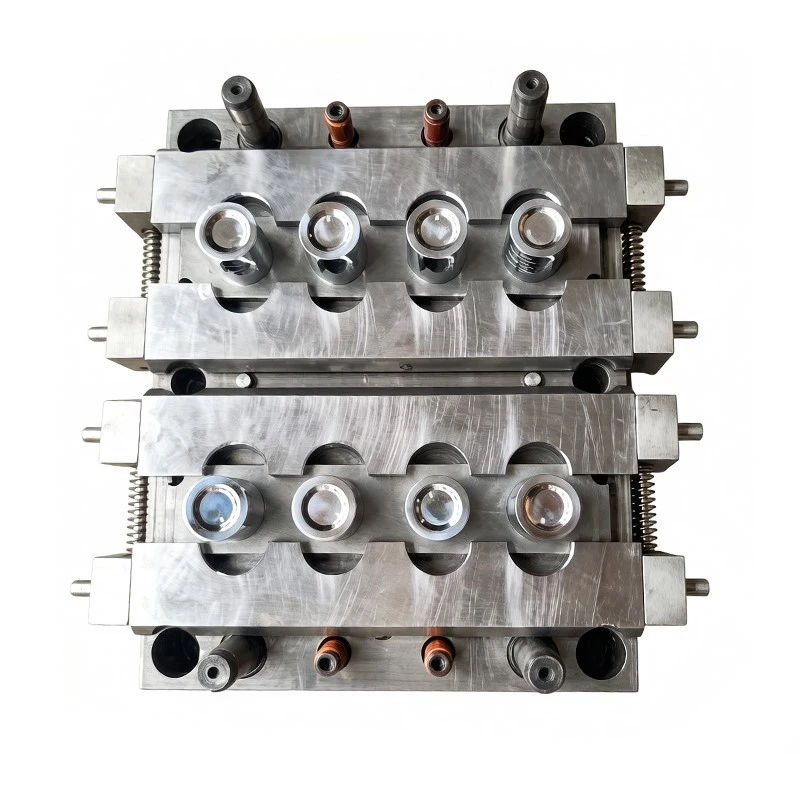

The mineral water bottle cap you unscrew every day is actually a masterpiece of injection molding. The mold functions like an ice cube tray: molten plastic is injected into the cavity and takes shape upon cooling. However, bottle cap molds are far more complex:
Thread structure: Spiral grooves ensuring a tight seal, requiring a tolerance of less than 0.05 mm.
Anti-slip rib design: Wavy patterns to increase friction, typically featuring 12–16 raised ribs.
Breakaway bridges: Connection points that snap upon the first opening; their thickness requires precise control.
Three Core Aspects of Mold Design
Parting line selection: Crucial for the cap's appearance; common types include flat and curved parting lines.
Cooling system: An integrated network of water channels that cools molten plastic from 300°C to 60°C within 7 seconds.
Ejection mechanism: 24 ejector pins operating in unison to ensure thin-walled caps are released without deformation.
New Trends: Sustainability and Smart Technology
Modern bottle cap molds are undergoing a transformation:
Lightweight design: Wall thickness reduced from 1.2 mm to 0.8 mm, saving 20% on raw materials.
Rapid mold change system: Mold replacement completed within 15 minutes, accommodating diverse production needs.
In-mold inspection: Integrated sensors monitor temperature and pressure in real-time, reducing the defect rate to below 0.3%.